Living with chronic dry eye syndrome, meibomian gland dysfunction (MGD), or recurring chalazia can significantly impact your quality of life. Simple daily activities like reading, working on a computer, or even being outdoors can become uncomfortable challenges. At Stoney Creek Eye Care, we’re committed to finding the most effective solutions for these persistent conditions, which is why we’ve invested in one of the most advanced technologies available for treating eyelid and tear gland disorders: the Jett Plasma Pen.
Unlike traditional approaches that offer temporary symptom relief, the Jett Plasma Pen addresses these conditions at their source using cutting-edge technology that’s only recently become available in eye care. Let’s explore what makes this treatment different and how it could provide the lasting relief you’ve been searching for.
Understanding the Conditions: Dry Eye, MGD, Blepharitis, and Chalazia
Before we discuss treatment options, it’s important to understand these interconnected conditions and why they often occur together. All of these issues relate to the health and function of your meibomian glands—the tiny oil-producing glands located along your eyelid margins.
How Dry Eye and MGD Affect Your Daily Comfort
Dry eye syndrome occurs when your tears can’t provide adequate lubrication for your eyes. While this can happen for various reasons, one of the most common causes is meibomian gland dysfunction (MGD). Your meibomian glands produce the oil layer that prevents your tears from evaporating too quickly. When these glands become blocked or don’t function properly, your tear film becomes unstable.
You might experience symptoms such as:
- Persistent stinging or burning sensations
- A scratchy, gritty feeling, as if something is in your eye
- Epiphora or paradoxical watery eyes—your body’s response to irritation
- Blurred vision that comes and goes, particularly during reading or screen time
- Difficulty wearing contact lenses comfortably
- Eye fatigue that worsens throughout the day
This condition can make it difficult to wear contact lenses and can interfere with activities that require focus. Our goal is to provide effective dry eye treatment to improve your daily comfort. We want to find a solution that works for you.
The Connection to Blepharitis
Blepharitis is inflammation of the eyelids, often involving the eyelid margins where your meibomian glands are located. This condition frequently coexists with MGD because blocked glands can become inflamed, and inflammation can contribute to further blockages. Bacteria, demodex mites, and accumulated debris along the eyelid margin can all play a role in perpetuating this cycle.
Understanding Chalazia
A chalazion develops when a meibomian gland becomes completely blocked, causing oil to accumulate within the gland. This creates a small, often painless bump on your eyelid. Unlike a stye (also called an internal hordeolum, which is an infection), a chalazion is typically not painful, though it can cause tenderness and swelling. If a chalazion grows large enough, it can press against your eye and temporarily affect your vision.
Chalazia can be persistent or recurrent if the underlying gland dysfunction isn’t addressed. This is why treatments that restore healthy gland function—like the Jett Plasma Pen—can be key to preventing future occurrences.
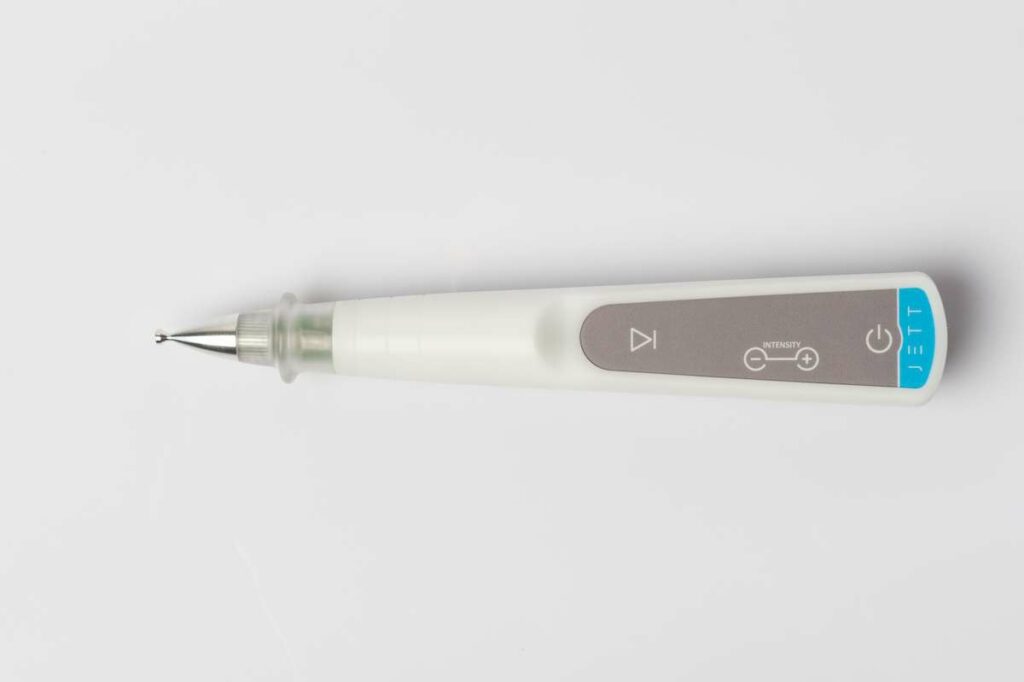
What Makes the Jett Plasma Pen Different?
When warm compresses, lubricating drops, and lid hygiene don’t provide adequate relief, it’s time to consider advanced treatment options. The Jett Plasma Pen represents a significant leap forward in how we approach meibomian gland dysfunction and related eyelid conditions.
The Technology: Patented Direct Current (DC) Plasma
The Jett Plasma Pen uses patented Direct Current (DC) technology to create controlled plasma energy. This distinguishes it from older Alternating Current (AC) plasma devices, which lack the precision and consistency needed for delicate eye area treatments.
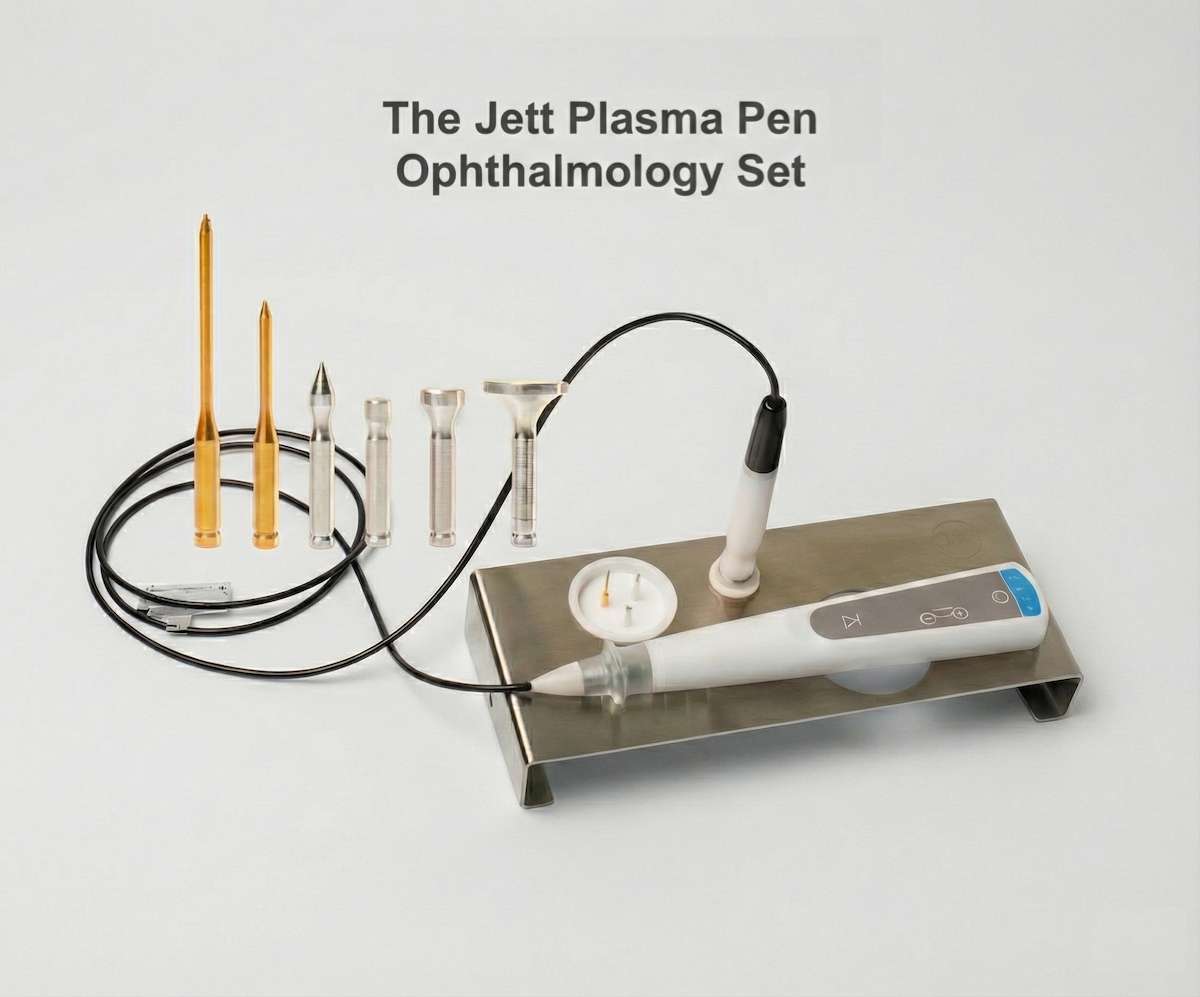
Here’s how the technology works: The device contains interchangeable metal applicator tips that react with atmospheric gases when positioned between the skin and the applicator head. Direct current voltage ionizes these atmospheric gases, creating a plasma discharge that delivers focused thermal energy and controlled micro-discharges to the treatment area.
This DC technology allows for both precise dot-by-dot application and scanning methods, enabling your optometrist to target exactly the areas that need treatment. The control this provides means less downtime, reduced risk of scarring, and more natural-looking results compared to older AC plasma devices that can only perform wide dot-by-dot application with inconsistent depth control.
Two Treatment Approaches: Understanding Ablative vs. Non-Ablative
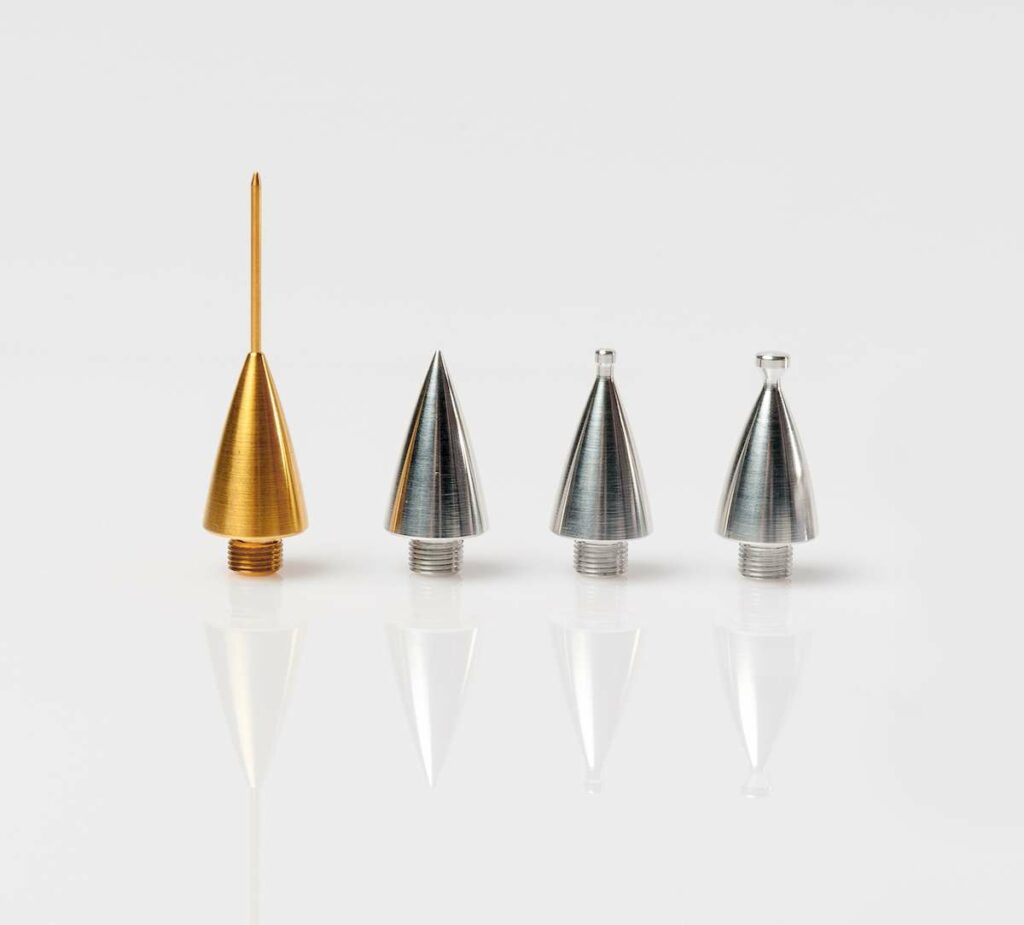
The Jett Plasma Pen system is designed with versatility in mind, offering two distinct types of applicator tips for different treatment purposes. While the device is capable of both ablative and non-ablative procedures, at Stoney Creek Eye Care we exclusively use the non-ablative silver tips for treating dry eye, MGD, blepharitis, and chalazia.
Silver Applicators (Non-Ablative Procedures): These are what we use at Stoney Creek Eye Care for treating dry eye, MGD, blepharitis, and chalazia. The silver tips create reversible electroporation, (a completely different mechanism to the gold tip) that works beneath the skin’s surface to rejuvenate cells and restore gland function without removing or damaging the outer layer.
This approach offers remarkable therapeutic benefits with zero downtime and complete comfort during treatment, making it ideal for optometric care of the delicate eye area and for patients who want effective results without recovery time.
Gold Applicators (Ablative Procedures): These tips create a plasma arc by holding the applicator 2-4mm above the skin. In medical and aesthetic practices, they can be used for more invasive procedures like non-surgical blepharoplasty, removal of benign vascular and skin lesions, lid tightening, and treatment of conditions like ectropion, entropion, or conjunctivochalasis.
These ablative procedures are typically performed by dermatologists or specialized cosmetic practitioners, as they involve removing or altering the outer layer of skin and require longer healing time with more post-treatment care. These gold tip procedures are not typically used by optometrists for dry eye treatment.
How Non-Ablative Silver Tip Treatment Works
The silver applicator tips work through a sophisticated five-step mechanism that addresses multiple aspects of meibomian gland dysfunction simultaneously. Understanding this process helps explain why Jett Plasma treatment can be so effective when other approaches have failed.
The Five-Step Mechanism of Action
Step 1: Gel Polarization The treatment begins with the application of a specialized conductive gel to the eyelid area. When the silver applicator is positioned over this gel, the gel becomes polarized, creating the ideal medium for energy transfer.
Step 2: Micro-Discharges Penetrate Impacted Meibum Controlled micro-discharges travel through the polarized gel and penetrate into the blocked meibomian glands. These micro-discharges target the thickened, waxy meibum (oil) that has become stuck in your glands, beginning to break down these blockages from within.
Step 3: Cell Membrane Depolarization and Reversible Electroporation This is where the treatment’s unique benefits begin. The micro-discharges cause temporary depolarization of cell membranes in the treatment area. This triggers reversible electroporation—a biophysical phenomenon where tiny, temporary pores form in cell membranes.
These microscopic openings allow the contents inside cells to “liquify and enter the intercellular space through openings in the membrane.” What this means in practical terms: damaged or compromised cells in and around your meibomian glands suddenly gain access to nutrients, water, and other vital substances they’ve been lacking. The cells essentially get “juiced up,” allowing them to function better and heal more effectively.
Reversible electroporation is an established technology used in biotechnology, medicine, and even the food industry. When the electrical field is removed, these temporary pores reseal, but the cells have been revitalized. This process facilitates:
- Rejuvenation and revitalization of gland tissue
- Significant reduction of inflammation
- Cells regaining their healthy, spherical shape
- Restoration of natural gland function
- Improved blood flow to the treatment area
Step 4: The Astringent Effect—Direct Gland Expression Simultaneously, the micro-discharges create pulses of DC microcurrent that produce what’s called an “astringent effect.” This is the physical mechanism that unclogs your glands.
The vibration from the micro-discharges causes the meibomian glands themselves to contract and relax rapidly. This mechanical action pushes out the impacted meibum that has been broken apart by the energy. Think of it as a highly targeted, internal massage that clears out years of accumulated blockages. This is similar to what radiofrequency (RF) devices accomplish with heat, but the Jett Plasma achieves it through a different, highly controlled mechanism.
Step 5: Anti-Inflammatory, Antimicrobial Effects, and Increased Blood Flow The treatment produces multiple additional therapeutic effects:
- Anti-inflammatory action similar to what Intense Pulsed Light (IPL) therapy provides, helping to calm chronic eyelid inflammation
- Destruction of microbes and demodex mites that contribute to blepharitis and ongoing inflammation
- Increased blood flow to the eyelid tissues, bringing fresh oxygen and nutrients while removing inflammatory waste products
- Stimulation of goblet cells when applied to mucous membranes, promoting better tear film composition
Why This Combination Is So Powerful
The Jett Plasma Pen essentially combines the benefits of multiple dry eye treatments into a single device. It offers:
- The anti-inflammatory and demodex-killing effects of IPL therapy
- The gland expression capabilities of radiofrequency treatments
- The cellular rejuvenation that comes from improved nutrient delivery
- Direct mechanical unclogging of blocked glands
This multi-mechanism approach explains why many patients experience significant, lasting improvement even when individual therapies haven’t provided adequate relief.
Comparing Jett Plasma to Other Dry Eye Technologies
To understand where Jett Plasma fits in the landscape of advanced dry eye treatments, it’s helpful to compare it to other established technologies.
Intense Pulsed Light (IPL) Therapy
IPL uses broad-spectrum light (similar to a camera flash but with specific wavelengths) applied to the skin of the face and under-eye areas to reduce dry eye symptoms. IPL works through several mechanisms:
- Causing thrombosis (closure) of abnormal inflammatory blood vessels around the eyelids
- Potentially softening meibum, though the skin cools quickly after treatment
- Increasing skin epithelial turnover rate, which reduces debris that can clog glands
- Killing demodex mites
- Modulating inflammatory molecules (cytokines and chemokines)
- Decreasing matrix metalloproteinases (MMPs) that break down healthy tissue
- Providing photobiomodulation—using light to induce beneficial cellular changes
IPL is excellent at addressing the inflammatory component of MGD and blepharitis, but it doesn’t provide direct mechanical gland expression or the cellular revitalization that electroporation offers.
Radiofrequency (RF) Treatment
RF technology has been used for decades in the cosmetic industry and more recently adapted for dry eye treatment. RF uses radio waves to generate heat deep in the eyelid tissues through vibration of water molecules in the skin.
The goals of RF for dry eye include:
- Heating the eyelid tissue to soften the waxy, hardened meibum inside blocked glands
- Allowing this softened oil to be expressed out, either during the treatment or immediately after using tools like the Mastreda paddle
- The key is “striking while the iron is hot”—expressing glands while they’re still warm
RF has been around longer and was initially used to treat fine lines and wrinkles before being adapted for meibomian gland dysfunction. It’s effective at the obstructive component of MGD but doesn’t offer the anti-inflammatory benefits of IPL or the cellular regeneration of reversible electroporation.
How Jett Plasma Combines the Best of Both
The Jett Plasma Pen’s non-ablative silver tip treatment offers a “best of both worlds” approach:
- It provides simultaneous gland expression like RF does, through the astringent effect
- It delivers anti-inflammatory benefits like IPL, through reversible electroporation
- It adds unique benefits neither technology offers: cellular revitalization, antimicrobial action at the cellular level, and improved blood flow
Perhaps most remarkably, it accomplishes all of this with zero downtime and complete patient comfort—significant advantages over both traditional IPL and RF treatments.
What to Expect During Your Jett Plasma Treatment
Understanding what happens during the actual procedure can help you feel more comfortable and confident about moving forward with treatment.
The Procedure Step-by-Step
Preparation: We begin by applying a local anesthetic to your eyelid area. This ensures you remain completely comfortable throughout the procedure. The silver tip treatments are gentle and non-invasive, but the anesthetic eliminates even the mild sensations you might otherwise feel.
Gel Application: We apply the specialized conductive gel to the treatment areas. This gel is essential for the technology to work properly, as it becomes polarized and allows the micro-discharges to reach the meibomian glands effectively.
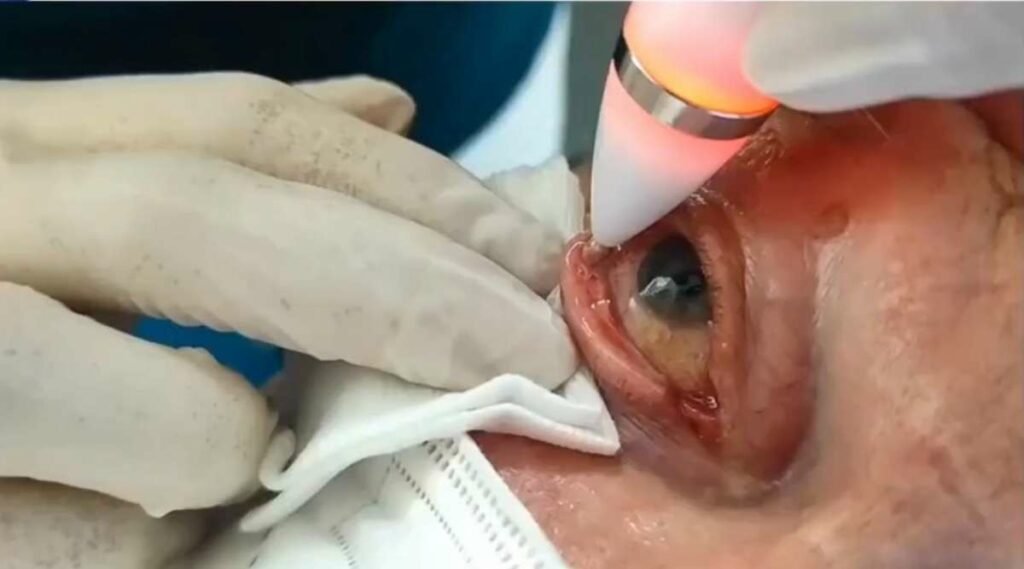
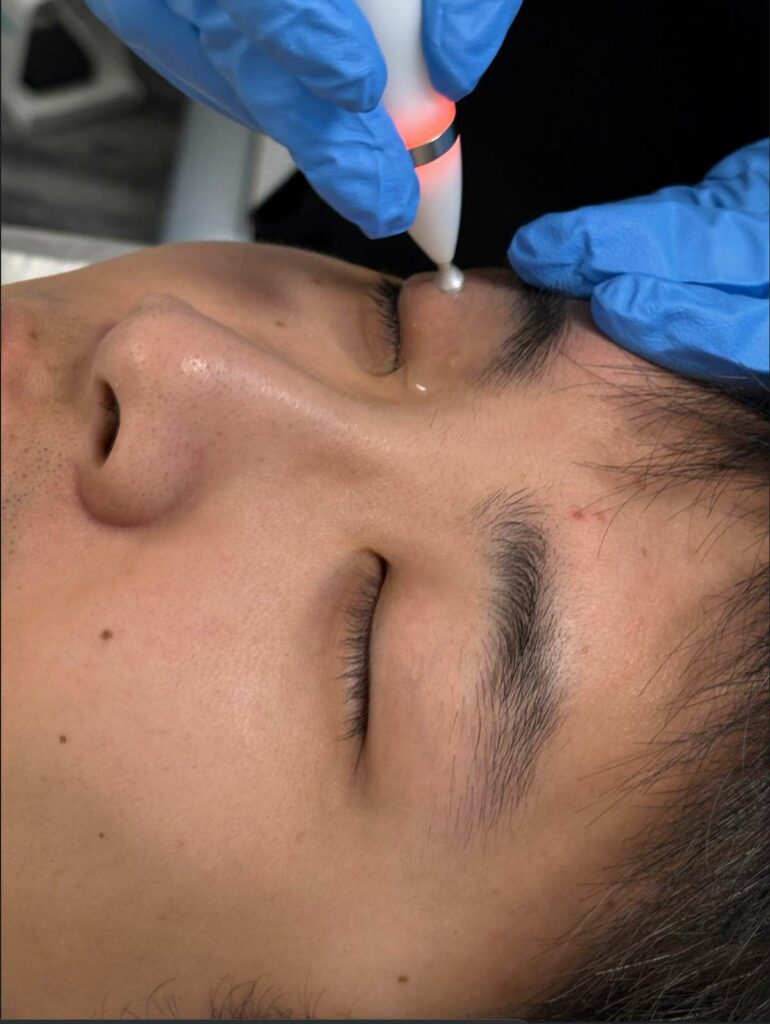
Treatment: Using the handheld Jett Plasma Pen with the silver applicator tip, your optometrist delivers the controlled micro-discharges to the targeted areas. You may feel a slight warming sensation, but the treatment is generally very comfortable. The entire procedure is relatively quick, typically completed within the same appointment as other dry eye treatments.
The optometrist or optometric assistant will slowly glide the Jett plasma pen over the following areas:
- The inside of the lower and upper eyelids
- The eyelid margins (water line)
- The outside of the upper and lower eyelids
Several passes are done on each tissue for optimal results. The procedure itself is typically performed within a 30 – 45 minute visit, and may be combined with other in-office treatments such as IPL (Intense Pulsed Light treatment) within the same visit.
Immediate Post-Treatment: After the treatment, we remove the gel and assess the treatment area. You might notice mild redness, which is a normal response and typically resolves within a few hours to a couple of days.
Recovery and Aftercare
One of the most significant advantages of the non-ablative silver tip treatment is that there is zero downtime. Most patients can return to their normal activities immediately after their appointment. We’ll provide you with simple aftercare instructions to optimize your results.
The mild redness or slight swelling that sometimes occurs typically resolves within a day or two, but most patients may not experience any noticeable redness or swelling. Unlike ablative procedures or some other dry eye treatments, there’s no crusting, scabbing, or need to take time off work or avoid social activities.
Treatment Protocol and Frequency
Based on current clinical protocols and our experience with the technology, we typically recommend:
Initial Treatment Series: Four treatments to establish lasting improvement in gland function. At Stoney Creek Eye Care, we often combine Jett Plasma treatment with IPL therapy during the same visit, allowing us to address multiple aspects of dry eye disease simultaneously.
Treatment Spacing:
- Visits 1 and 2: Approximately 2 weeks apart
- Visit 3: About 3-4 weeks after visit 2
- Visit 4: About 3-4 weeks after visit 3
For chalazion treatment specifically, we may modify this schedule and space treatments closer together to specifically target the chalazion.
Maintenance Sessions: After completing the initial series, we may recommend booster sessions every 6 months to maintain healthy gland function and prevent symptoms from returning. The exact maintenance schedule will depend on your individual response to treatment and the severity of your condition.
Adjustable for Your Comfort
The Jett Plasma Pen offers adjustable intensity settings. If you’re particularly sensitive, we can turn down the power level to ensure your complete comfort while still achieving therapeutic benefits. This customization is another advantage of the precise DC technology.
Why Early Treatment of Chalazia Leads to Better Results With Jett Plasma Pen
Chalazia respond most effectively to treatment when they are addressed early, while the blockage is still relatively fresh. In the early stages, a chalazion is mainly caused by a soft blockage of the oil gland combined with active inflammation. Because the tissue has not yet become firm or scar-like, the plasma energy can work more effectively to shrink the lesion, reduce inflammation and swelling, and stimulate natural healing.
As time passes, the body can form a protective, fibrous capsule around the chalazion, making it firmer and more resistant to non-surgical treatments. By treating the chalazion early, the tissue is typically softer, smaller, and more responsive, leading to faster improvement, higher success rates, and a lower chance of needing minor surgery. This non-surgical approach also minimizes disruption to the eyelid tissues and supports preservation of the meibomian glands.
Early treatment further helps protect long-term oil gland health, supports a smoother eyelid contour, and reduces the risk of recurrence—making it a proactive, safe, and patient-friendly approach to care.
Although chalazia that have been present for several months can still respond to treatment, earlier care offers the best chance for optimal results and complete resolution.
Who Is a Good Candidate for Jett Plasma Pen Treatment?
While the Jett Plasma Pen offers remarkable benefits, it’s not the right choice for everyone. The best way to determine if you’re a candidate is through a comprehensive evaluation at our office.
You May Be an Excellent Candidate If:
- You have chronic dry eye syndrome related to meibomian gland dysfunction that hasn’t responded adequately to conventional therapies like warm compresses, lid hygiene, and artificial tears
- You experience recurring chalazia that keep coming back even after treatment
- You’ve been diagnosed with significant meibomian gland blockage or dysfunction
- You have blepharitis that contributes to ongoing eye discomfort
- You’re looking for a treatment that addresses the root cause of your symptoms, not just temporary relief
- You want to avoid more invasive surgical approaches when possible
The Importance of Comprehensive Evaluation
During your consultation, we’ll conduct a thorough assessment of your eye health to understand the specific causes of your symptoms. Using advanced diagnostic tools and imaging technology, we can:
- Evaluate your meibomian gland structure and function
- Assess your tear film quality and stability
- Examine your eyelid margins for signs of inflammation or blockage
- Identify any contributing factors like demodex infestation or abnormal blood vessel growth
- Review your treatment history to understand what has and hasn’t worked for you
This comprehensive evaluation allows us to determine not only if Jett Plasma treatment is appropriate for you, but also whether combining it with other therapies (like IPL, prescription medications, or lifestyle modifications) would provide even better results.
The Broader Benefits: Medical and Aesthetic Advantages
While our primary focus is treating the medical conditions affecting your eyes and eyelids, it’s worth noting that the non-ablative silver tip treatment offers additional aesthetic benefits. The reversible electroporation process that revitalizes gland cells also provides:
- Gentle skin tightening and rejuvenation around the eye area
- Reduction of shallow wrinkles and crow’s feet
- Improvement in skin elasticity and connective tissue health
- Restoration of a more youthful, refreshed appearance
These cosmetic improvements happen alongside the therapeutic benefits, as the treatment works to restore healthy function at the cellular level. Patients often notice not only that their eyes feel better, but that the area around their eyes looks more refreshed and youthful as well.
A Complete Approach to Your Eye Care
Jett Plasma Pen treatment represents an important advancement in how we address meibomian gland dysfunction and related conditions. However, it’s important to understand that it’s one component of a comprehensive eye care strategy, not a standalone solution.
For optimal, lasting results, we often combine Jett Plasma therapy with:
- IPL treatment for additional anti-inflammatory benefits and vascular effects
- Prescription medications when appropriate, such as anti-inflammatory eye drops or treatments for demodex
- At-home maintenance protocols including proper lid hygiene and warm compress therapy
- Nutritional support with specialized and scientifically backed omega-3 fatty acids and other supplements that support tear film health
- Environmental and lifestyle modifications to reduce factors that contribute to dry eye
Our goal is always to build a personalized treatment plan designed specifically for your needs, your lifestyle, and your long-term eye health goals.
Why Choose Stoney Creek Eye Care for Advanced Dry Eye Treatment
The technology is only as effective as the expertise behind it. At Stoney Creek Eye Care, we’ve invested not only in the Jett Plasma Pen system but in the training and experience necessary to use it effectively. We stay current with the latest research and clinical protocols to ensure you receive the most advanced, evidence-based care available.
More importantly, we take the time to understand your unique situation. Dry eye, MGD, blepharitis, and chalazia can have many different underlying causes, and what works for one person may not be ideal for another. We combine state-of-the-art diagnostic technology with a personalized, compassionate approach to care.
The Future of Dry Eye Treatment Is Here
For years, people suffering from chronic dry eye and meibomian gland dysfunction had limited options beyond symptom management. The emergence of technologies like the Jett Plasma Pen represents a fundamental shift, from simply managing symptoms to actually restoring healthy gland function at the cellular level.
If you’ve been struggling with dry, irritated eyes, recurring chalazia, or the frustration of treatments that only provide temporary relief, it may be time to explore what advanced technology can do for you.
Your Next Steps Toward Lasting Relief
Every patient’s eyes are unique, and so are the factors contributing to discomfort and gland dysfunction. That’s why lasting relief starts with understanding exactly what’s happening with your eyes.
At Stoney Creek Eye Care, your journey begins with a complete eye assessment using modern diagnostic tools and imaging technology. We’ll take a detailed look at your eyelid glands, tear quality, and overall eye surface health to understand the root causes of your symptoms.
If we identify blocked glands, inflammation, or other issues that could benefit from advanced treatment, we’ll discuss all your options—including the Jett Plasma Pen and how it might fit into a comprehensive treatment plan tailored specifically to you.
Whether you’re managing persistent dry eye, dealing with recurring chalazia, or simply ready to feel comfortable throughout your day, our team is here to help you find real, lasting solutions.
Book your comprehensive dry eye evaluation today and take the first step toward clearer, more comfortable vision. Contact Stoney Creek Eye Care to schedule your appointment and discover how advanced technology combined with personalized care can make a meaningful difference in your eye health and quality of life.