Key Takeaways
- A chalazion forms when an oil gland in the eyelid gets blocked and the trapped oils harden over time.
- A hardened chalazion can resolve on its own, but it may take weeks to several months.
- Warm compresses and gentle eyelid massage can help speed up healing at home.
- See an eye doctor if there’s no improvement after 2 to 3 weeks, or sooner if symptoms worsen.
- Daily eyelid hygiene can help reduce the chance of a chalazion coming back.
What a Chalazion Is & Why It Hardens
You notice a firm little lump on your eyelid. It doesn’t hurt much, but it’s been there for a while and it doesn’t seem to be going anywhere. That lump is likely a chalazion, and it forms when a tiny oil gland in your eyelid gets blocked. A hardened chalazion may go away on its own, but it often takes several weeks to a few months for the body to fully reabsorb the blocked oils.
If you’re unsure what you’re dealing with, or if you have a chalazion that won’t go away, our team at Stoney Creek Eye Care can take a closer look during an eye exam.
What Is a Chalazion?
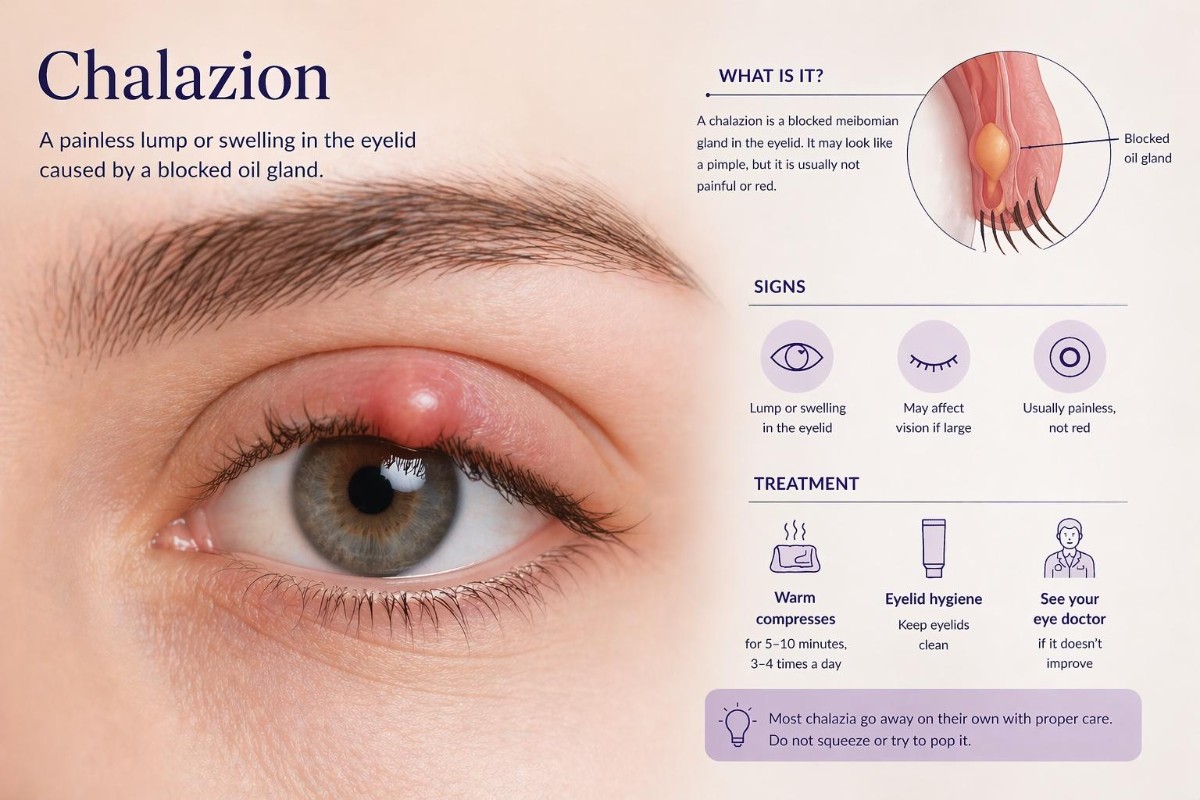
When oil can’t flow out of an oil gland, it begins to build up and thicken. Over time, that trapped oil hardens into a round, firm bump right in the middle of your eyelid. The longer the oil sits, the more solid it tends to feel. This hard bump is called a chalazion.
Can a Hardened Chalazion Go Away on Its Own?
In many cases, a hardened chalazion will go away, but the process can often take a while. Consistent home care can help move the process along.
How Long a Hardened Chalazion Can Last
There’s no single timeline for how long a chalazion sticks around. Some resolve within a few weeks with regular warm compress use, while others linger for several months.
The size and how long the chalazion has been there both play a role. A larger or older chalazion generally takes more time to clear up than one caught early.
Signs a Chalazion Is Healing
Healing tends to happen gradually, so it can be easy to overlook progress. Keep an eye out for these positive changes:
- The lump slowly shrinks and starts to feel softer when you press on it gently
- Redness and any puffiness around the eyelid begin to fade
Chalazion vs. Stye: Key Differences
A stye and a chalazion can look similar, but they’re not the same thing. A stye is linked to an infection and usually comes with noticeable pain, redness, and tenderness right along the edge of the eyelid. A chalazion, on the other hand, is caused by a simple blockage and is typically painless.
A chalazion can also develop at the same time or after a stye has resolved. The same gland that gets infected can also develop a chalazion.
Signs Your Chalazion Has Hardened
If your chalazion has been around for a few weeks, you may notice the following signs that it has hardened:
- A firm, round lump in the centre of the eyelid
- Little to no pain unless the area is inflamed
- Slightly blurred vision if the lump is pressing on your eye
Home Care for a Hardened Chalazion
The two most helpful things you can do at home to resolve a chalazion are applying warm compresses and keeping your eyelids clean. Warmth helps soften the hardened oil inside the gland, while good hygiene keeps the area from getting further irritated. Gentle eyelid massage right after a warm compress can also encourage natural drainage.

How to Apply a Warm Compress
A moist heat mask (such as a Bruder mask) is a convenient and effective option for applying consistent, soothing warmth to your eyelids. Simply heat the mask according to the manufacturer’s instructions, place it gently over your closed eyelids, and leave it on for 5 to 10 minutes. Aim to do this 3 to 4 times a day for the best results. After removing the mask, use a clean fingertip to gently massage the area in small circular motions to help encourage the natural flow of oils from your glands.
One of the great benefits of a moist heat mask is that it retains a comfortable, steady temperature throughout the entire treatment. There’s no need to reheat a cloth partway through. This makes these masks reliable and easy to use.
What to Avoid During Healing
A few habits can slow down your recovery if you’re not careful. While the chalazion is healing, it helps to:
- Skip eye makeup and contact lenses until the area has cleared
- Avoid squeezing or pressing the lump directly, as this can make things worse
When to See an Eye Doctor
Home care works well for many chalazions, but some lumps need a closer look. If you’ve been doing warm compresses consistently for 2 to 3 weeks and haven’t noticed any change, it’s a good time to book an appointment. The same goes if the lump is getting bigger, starting to hurt, or affecting your vision. Knowing which symptoms call for urgent care can help you act at the right time.
Discharge around the eyelid, signs of infection, or chalazions that keep coming back are also reasons to get checked out sooner rather than later.
Treatment With Jett Plasma Pen
At Stoney Creek Eye Care, we offer advanced in-office treatment for chalazions that don’t respond to home care. Our primary approach uses the Jett Plasma Pen, a non-invasive technology that applies controlled microcurrent energy to help shrink the chalazion, reduce inflammation, and stimulate natural healing. There’s no cutting, no stitches, and no extended recovery. After applying a local anesthetic, the treatment is typically completed within a 30 to 45 minute visit.
Chalazions respond best to treatment when caught early, while the blockage is still soft. As time passes, the body can form a firmer, fibrous capsule around the chalazion, which can make it harder to treat without minor surgery. Treating early means faster improvement, higher success rates, and better preservation of your meibomian glands.
For chalazions linked to underlying meibomian gland dysfunction (MGD), we may also combine Jett Plasma with IPL therapy in the same visit to address the root cause and reduce the chance of recurrence.
Chalazions in Children: When to Act
Kids can get chalazions too, and they often respond well to warm compresses at home. However, it’s worth seeing an eye doctor sooner with children. If there’s no improvement after 1 to 2 weeks, or if you notice rapid growth, discharge, or signs of discomfort, getting a pediatric eye exam can help rule out more serious problems.
Prevention & Long-Term Eyelid Health
Once a chalazion clears up, a few simple habits can help keep your eyelid glands flowing freely. Cleaning your eyelids daily with a gentle cleanser removes the buildup that can clog glands over time. Using a HOCL (hypochlorous spray) helps control the bacteria around the eyelids and eyelashes that typically lead to styes and chalazia.
If you have an underlying condition like blepharitis, managing it consistently makes a noticeable difference. Adding omega-3-rich foods to your diet, such as salmon, flaxseed, or walnuts, can also support healthy oil production in the glands.
Everyday Habits That Help
Small daily choices add up when it comes to eyelid health. Replace your eye makeup every few months to limit bacteria near the eye area. Try to avoid rubbing or touching your eyes during the day, since that can introduce irritants that block oil glands over time.
If chalazions keep coming back despite good hygiene, our team at Stoney Creek Eye Care can take a close look and walk you through your options. Book your appointment today and get the care your eyes deserve.